
There’s some confident stubbornness about the little girl in Jafar Panahi’s movie The White Balloon.
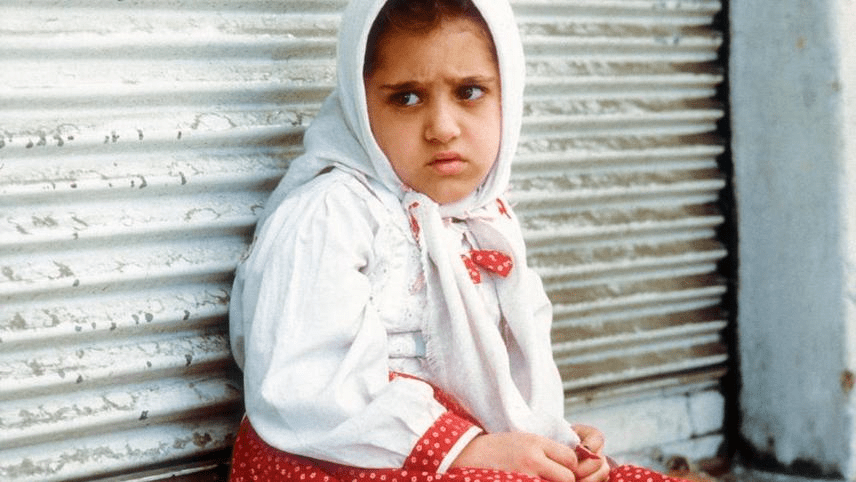
From the beginning, she has already decided. She wants the goldfish she saw in the shop—fatter, better, different from the ones they already have. Her mother tries to reason with her. They already have beautiful fish. There’s no need for another one. But none of it seems to reach her.
The girl tries to explain to her mom and brother. Those fish are different. Theirs are skinny. The others look like they are dancing when they move their fins. Their fins are long, and they have four of them.
As the film continues, it becomes clear that the girl isn’t going to reconsider. Her desire has already taken a precise form, and nothing—advice, alternatives, even small corrections—can reshape it.
It feels natural because of how exact it is. Children don’t approximate what they want. They attach themselves to a very specific image that is difficult to replace.
Watching the movie, I kept thinking about how familiar that kind of wanting felt. Not intense or dramatic, but exact. And it reminded me of something from my own childhood.
There was a time when everyone in my class had one of those small point-and-shoot cameras. We called them “soap-dish” because of their shape. On school trips, my classmates would take photos of each other, of random moments, of nothing in particular. Later, those photos became a way to return to those moments, back when there was no social media and the internet wasn’t widely available.
We already had a camera at home, a family camera. It wasn’t like I didn’t have access to one. But it wasn’t mine. I couldn’t just take it with me, use it freely, carry it around the way the others did.
I don’t remember saying my desire aloud. I expected my mom to understand, to notice it without me having to explain. It felt obvious to me, even if I couldn’t quite put it into words. When one of the holidays approached, I expected the camera to be an obvious present that my parents would think of.
One birthday morning, I woke up and felt something next to my pillow. Just from touching it, an image appeared in my mind. It couldn’t have been true.
But at the same time, it felt like it might have been.
I opened it—and it wasn’t a camera.
It was a pair of theater binoculars.
It wasn’t that the gift was wrong.
It just didn’t match the shape of the object I already pictured in my freshly awoken mind.
There was a camera in the house already. As a family with an income on the lower side of the average, it would have been an unnecessary thing to have two. But if someone had tried to explain that to me, I don’t think I’d have heard or understood that.
It’s the same kind of mismatch in the movie. The fish that the little girl is chasing isn’t really that different from the ones she already has at home. And still, it doesn’t matter.
What she wants has already taken shape in her mind.
And that’s what The White Balloon understands so well—how precise the shape of the idea can be in a child’s head, and how little room it leaves for changes.

 Xella Reads
Leave a comment